Does L-serine improve overall clinical status, measured mainly by the Clinical Global Impression-Severity (CGI-S) score?
Clinical Study
Tailored Approaches targeting Pathophysiology in GRIN-related neurodevelopmental disorders
The goal of this clinical study is to find out whether L-serine dietary supplementation helps improve overall clinical functioning in children and young adults (2-30 years) with GRIN-related neurodevelopmental disorders (GRIN-NDD) caused by loss-of-function (LoF) variants in GRIN1, GRIN2A, GRIN2B, or GRIN2D. It will also assess the safety and tolerability of L-serine.
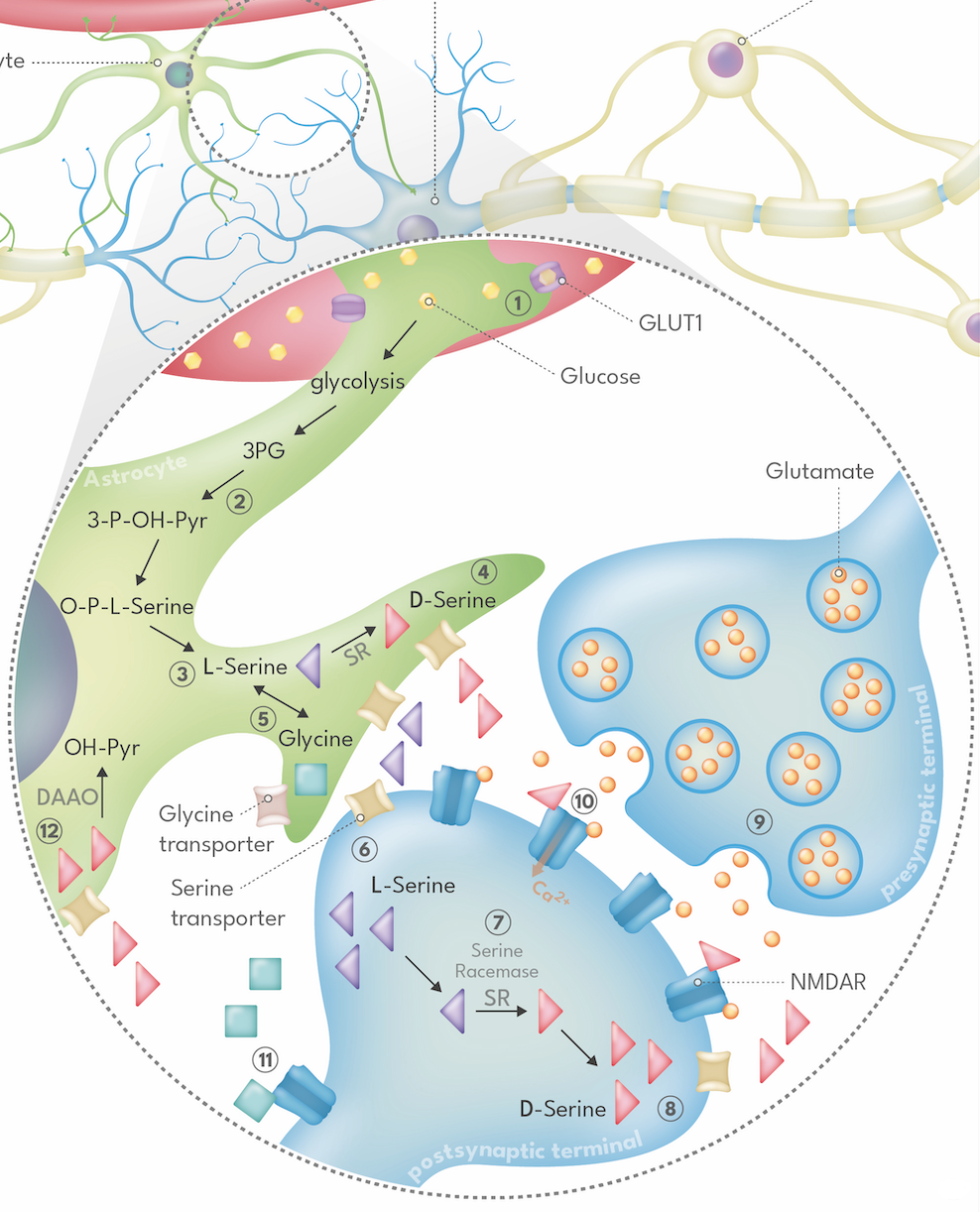
Current Scope
The main questions the project aims to answer are:
Does L-serine improve behaviour, cognition, adaptive functioning, motor skills, sleep, and, in those with epilepsy, seizure frequency and EEG findings?
What side effects or medical problems occur during L-serine compared with placebo?
Do neurophysiological measures, including TMS-EMG and TMS-EEG, change with treatment and potentially act as biomarkers of response?
Study design
Researchers will compare L-serine to a placebo (maltodextrin powder with similar appearance/texture) using a randomised, double-blind, placebo-controlled “n-of-1” approach, where each participant receives both treatments in alternating periods. Results from multiple single-patient trials will then be combined (aggregated) to estimate the overall treatment effect across the study population.
Participants will
- Complete a 4-week baseline period with assessments and seizure diary use where applicable.
- Receive L-serine and placebo in alternating 3-month periods within each cycle, with a minimum of 2 cycles and up to 4 cycles.
- Take the assigned study product by mouth 3 times per day at 500 mg/kg/day, up to a maximum of 30 g/day for participants weighing 60 kg or more.
- Have the first 7 days of each 3-month period treated as washout, with data from that week excluded from the analysis.
- Attend regular clinic visits for clinical exams, safety labs, and standardized assessments of global status, behaviour, cognition, motor function and sleep.
- If they have epilepsy, keep a seizure diary and undergo EEG assessments after each treatment period.
- In some sites in Italy and France, undergo TMS-based neurophysiology testing.
- Optionally, a subset may join a cellular biomarker substudy with blood collection to generate iPSC-derived neuronal models and organoids.